01
Core
The common part that runsA compact MCU module with the minimum circuitry required for stable operation. Develop it on a Station, then install it in the device.

AN OPEN HARDWARE PROJECT
CraftVia is an open embedded development platform combining product-oriented MCU Cores with a Station for development and measurement. Build quickly, verify with real measurements, move the same Core into your device, and graduate to an integrated MCU design when the time is right.
Overview
Reduce the work of rebuilding a product-oriented MCU circuit for every project.
Bring programming, power control, logging, voltage, and current measurement into one reusable Station.
Carry circuits, firmware, and measured results from an early prototype into the next design.
System
A compact MCU module with the minimum circuitry required for stable operation. Develop it on a Station, then install it in the device.
A reusable environment for wiring, programming, power control, logging, voltage measurement, and current measurement.
The application-specific circuit connecting the Core to sensors, communications, drivers, power, and the outside world.
The Core model
A typical MCU development board combines the MCU with a debugger, USB interface, power supplies, switches, LEDs, and other development features. CraftVia moves reusable development functions to the Station and keeps only the circuitry necessary for reliable MCU operation on the Core.
MULTI-MCU PLATFORM
The same separation principle and Core interface can be applied across multiple MCU families. Choose the Core that fits the application, then use a common Station and a consistent workflow for programming, power, and measurement.
Development path
Delay the need for a custom PCB, then use the published design assets to move to a directly integrated MCU when scale or requirements demand it.
Development status
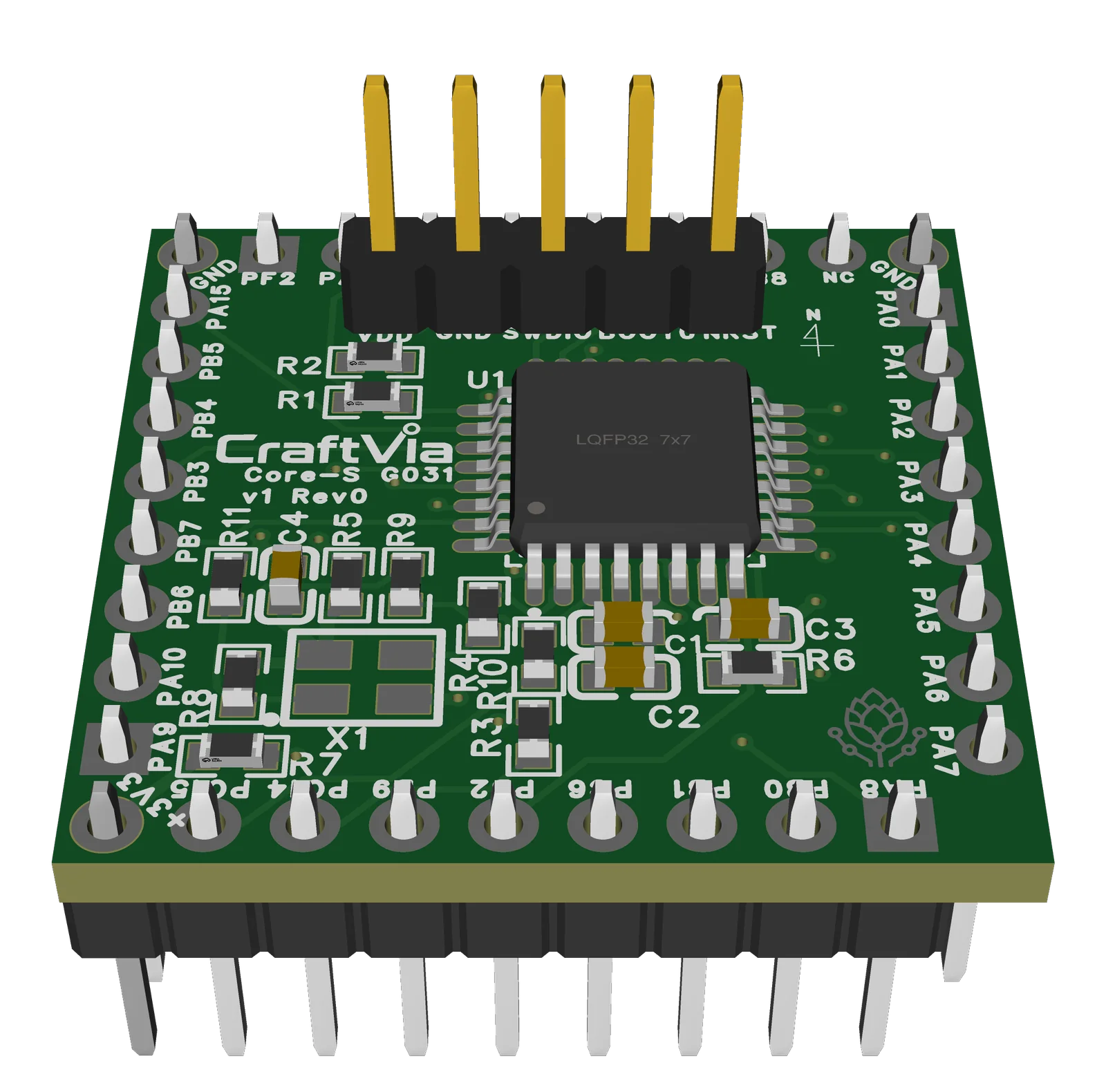
The first STM32G031-based Core-S implementation, providing the MCU and the circuitry required for its intended operating configuration.
GitHub ↗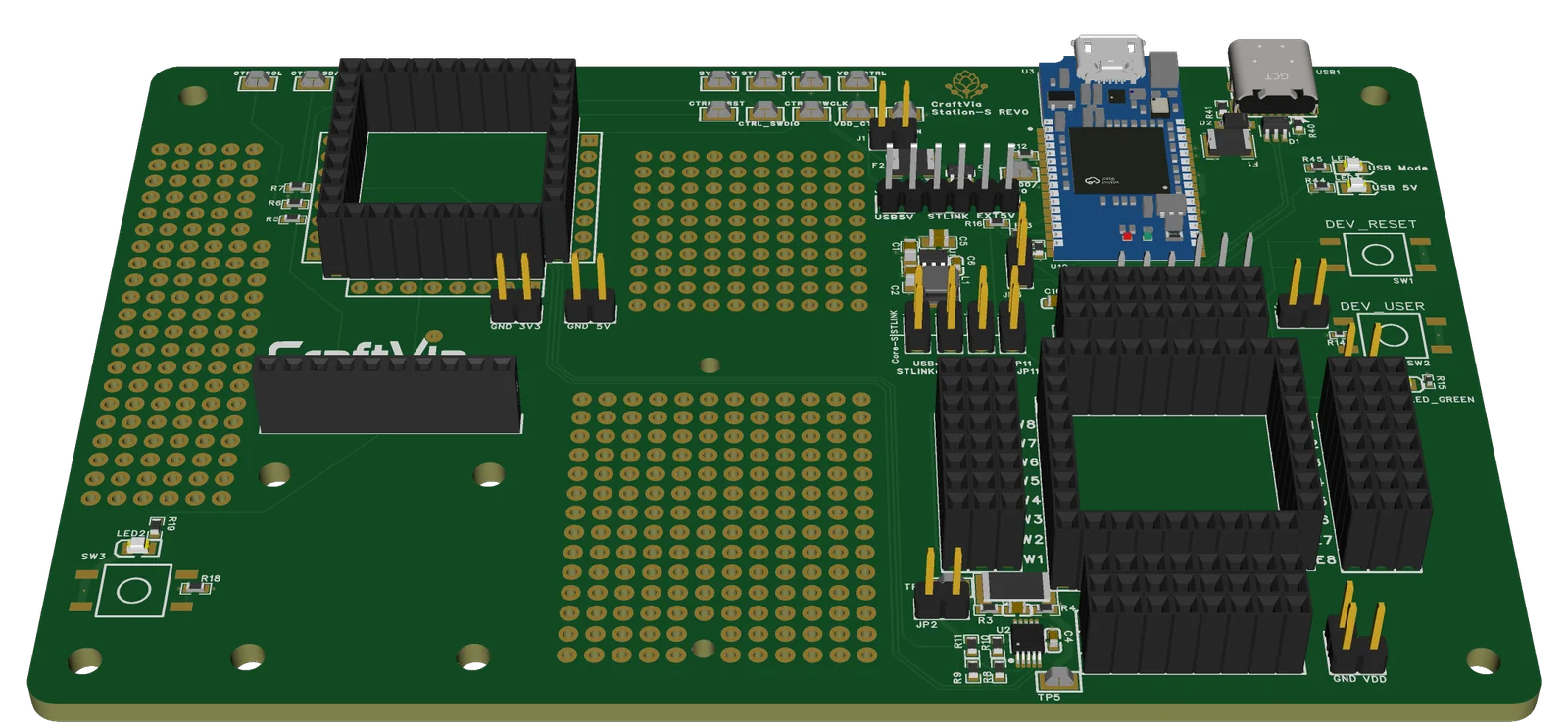
A reusable Core-S development and measurement platform for programming, power control, UART logging, breakout access, and voltage/current measurement.
GitHub ↗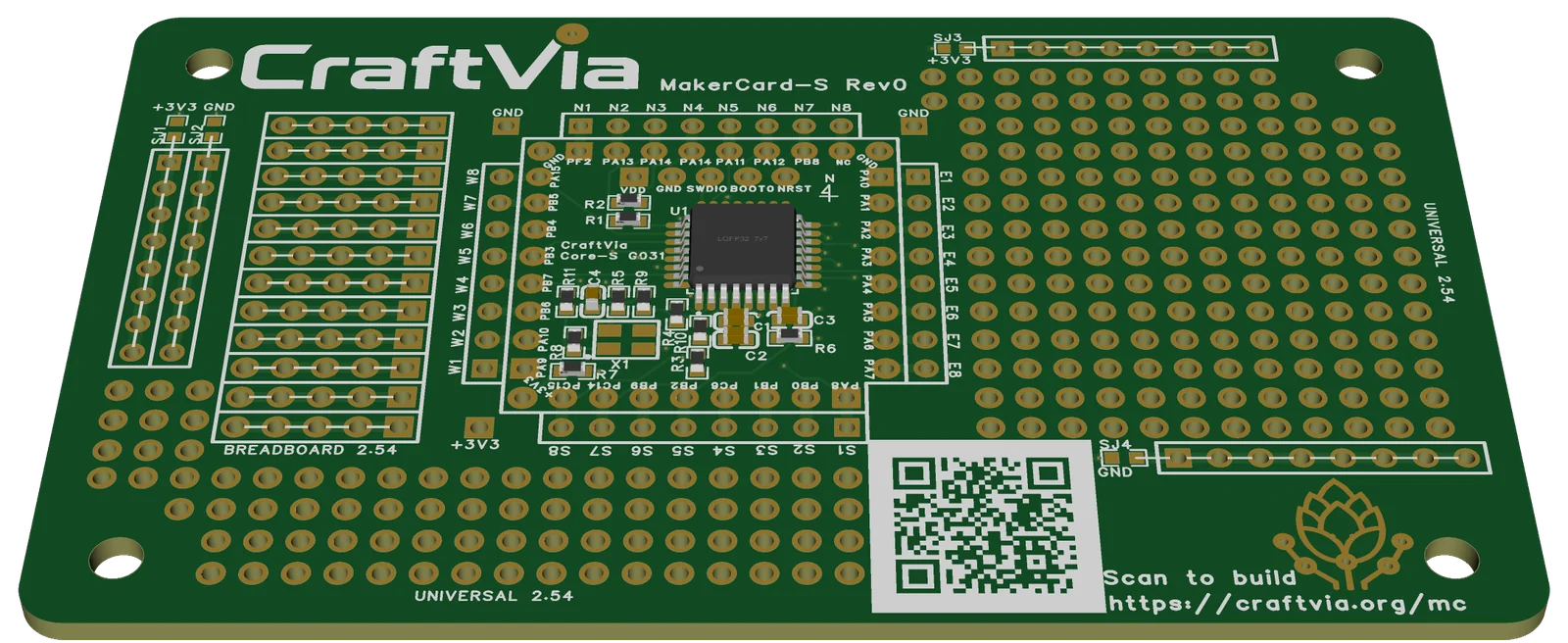
A reference implementation combining the Core-S G031 circuit with breakout, breadboard-style strips, power rails, and a universal prototyping field.
GitHub ↗A candidate next Core with wireless connectivity. Its application to the Core-S interface is under consideration.
GitHub ↗A candidate next Core based on RP2040. Power, programming, and pin allocation are under consideration.
GitHub ↗Design principles
Develop and measure on the Station, move into the device, and graduate to direct MCU integration.
Programming, logs, voltage, current, and test points are part of the design—not an afterthought.
Publish constraints, failures, measurement conditions, and decisions alongside design files.
Improve the platform using evidence from real prototypes, fixtures, and devices.
About the project
CraftVia publishes specifications, design files, verification results, and the reasoning behind the work. It is being developed as an open and reproducible path for embedded hardware.
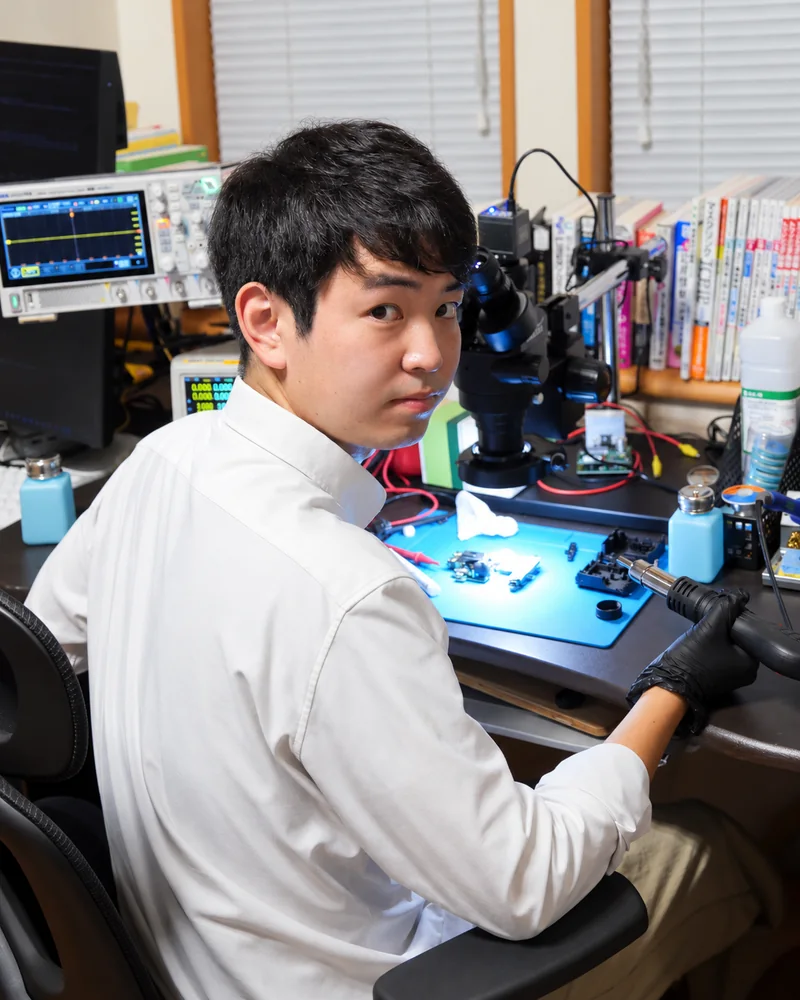
Founder & Developer
An embedded systems and hardware developer working across circuit design, PCB development, firmware, prototyping, and measurement. He started CraftVia to connect early prototypes and product-oriented hardware through an open, reproducible development path.
Project resources
Standards, compatibility, design guidance, and Getting Started.
Editable sources, Gerbers, BOMs, CPLs, and schematics.
Issue reporting, design review, and ways to participate.
This English version is the canonical source. The Japanese version is maintained as an official translation.